
Fire Alarm Servicing in Broadstairs: Working Around a School's Term Time
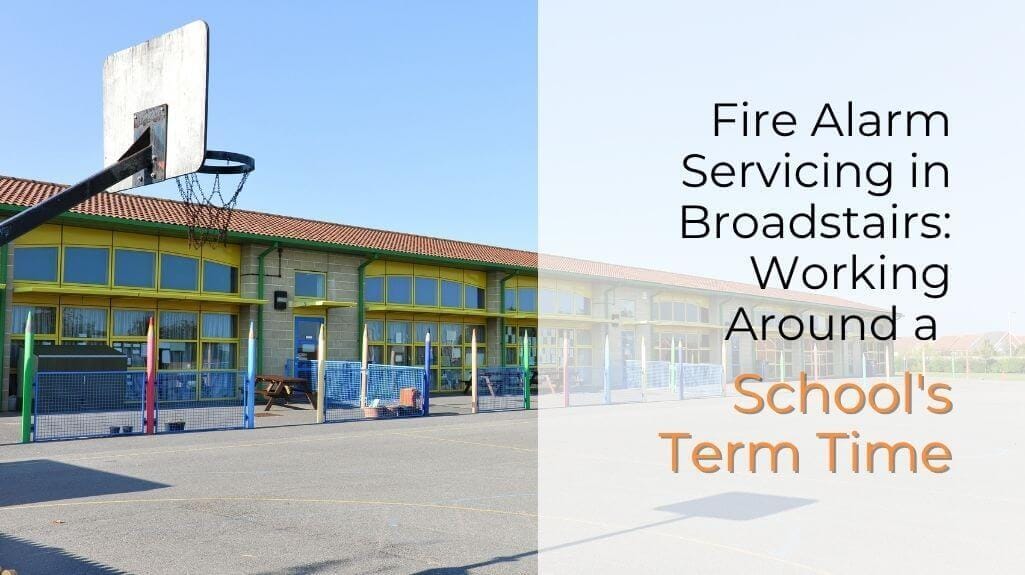
Broadstairs schools don't stop for a service visit. Term time runs on its own clock and testing a Fire Alarm's sounders or draining down Emergency Lighting batteries mid-lesson simply isn't something we do. Crucially, that one constraint shaped the whole way we approached our first visit to Wellesley Haddon Dene School on Ramsgate Road.
We're Syndicate Fire Protection Service, based three miles away in Ramsgate. Broadstairs is on our doorstep - we're in and out of its schools, care homes and holiday lets all year and we know the town well enough to plan around it, not just service it. As one of our clients, Elvey Farm in Ashford, put it: "Very efficient and no fuss service as always!"
That matters most for whoever carries the legal duty on a site - the Responsible Person, usually the head teacher, business manager or building owner. Under the Regulatory Reform (Fire Safety) Order 2005, their job is to keep Fire Detection, fire-fighting equipment and Emergency Lighting properly maintained - the Order sets the duty, not the frequency; British Standards fill that gap, as we cover below. Ours is to make that job less of a headache, without cutting corners to fit a school timetable.
How the school found us
Wellesley Haddon Dene School is an independent co-educational prep school for children aged two to eleven, at 114 Ramsgate Road. The school found us the same way most of our Broadstairs clients do now - a Google search, then straight to our website. No directory listing, no cold call. Just someone searching locally and finding a local answer.
They came to us for three services: Fire Alarm servicing, Fire Extinguisher servicing and Emergency Lighting testing. Three systems, one site, one Responsible Person trying to keep track of all of it.
Those three services cover the same legal duty from different angles - detection and warning, the fire-fighting equipment staff would reach for first, and the escape routes that need to stay visible if the power fails. One Responsible Person carries that whole duty, which is exactly why we try to deal with all three together wherever we can.
Why we could only do half the job on day one: Fire Alarm and Emergency Lighting testing had to wait
We carried out the takeover visit around the start of October. We serviced the extinguishers there and then. The Fire Alarm and the Emergency Lighting had to wait.
Here's why. Testing a Fire Alarm properly means sounding it. Testing Emergency Lighting properly means killing the power and watching what happens in the dark. Neither of those is something you can do with a classroom full of children next door.
So we deferred both to half term, when the building empties out and we can work through the system properly without disrupting a single lesson. It's a small scheduling decision. But it's the difference between a service that actually tests what it claims to test and one that's designed to skip the parts that are inconvenient.
This isn't unique to Wellesley Haddon Dene. Every school, nursery and college we work with across Broadstairs faces the same calendar problem - term dates that leave a narrow set of windows for the kind of testing that needs an empty building. Half terms, inset days and the summer holidays do a lot of heavy lifting for compliance work that simply can't happen on a Tuesday afternoon with Year 4 in assembly next door. Half term is a fixed point on the school calendar, not a flexible one - miss the window and the testing waits for the next one to come round.
Our one-visit method for Fire Alarm, extinguisher and Emergency Lighting servicing
When we do get the whole site to ourselves - whether that's a school at half term or any other building we can access in full - we don't treat Fire Alarm, extinguishers and Emergency Lighting as three separate jobs on three separate days.
We switch the Emergency Lighting to discharge first, so the batteries are already draining down while we work. Then, in the window that gives us - usually around three hours - we work through the Fire Alarm and the extinguishers. Last, we walk the building before switching the lights back, checking for any fitting that didn't hold up.
If a site's too big to finish in that window, we split it. But the sequence stays the same: lights down, alarm and extinguishers worked through, walk-round, lights back up.
One engineer - or two - on site for a day beats three separate visits spread across a month: fewer disruptions to the building, fewer repeat explanations of where everything is. That's not a British Standard talking. It's what we've found works, site after site, for schools, shops and offices alike.
There's a practical upside too: fewer separate visits means fewer vans making the same journey to the same building. We'd rather not claim more for that than it deserves - it isn't why we built the one-visit method - but it's a welcome side effect of doing fewer, better-planned visits instead of more, rushed ones.
The same engineers and Terry on the phone
The school told us its previous contractor used to send different engineers for the Fire Alarm and the extinguishers, on different days. We can't speak to anyone else's way of working and we're only passing on what we were told. But it's not how we do it. The same engineers come back to the same buildings, visit after visit - designed to cut down on the bit that costs a Responsible Person time: re-explaining where everything is, every single visit.
And when the school calls, it's often one of us who answers - more often than not, it's Terry. No call centre, no ticket number, just a direct line to someone who already knows the site. That's the personal touch you don't get from a large national contractor juggling a rota of subcontracted engineers.
Building the record as we go: BAFE SP203-1 and the 100% Promise
Every device we find and service gets logged. For Wellesley Haddon Dene, that process is still under way - Terry's converting the site notes from the takeover visit into our Intelligent Asset List, the record that tracks every extinguisher, call point and light fitting on a site, visit by visit. Once that's done - survey complete, Asset List complete, contract and access in place - the Fire Alarm comes under our 100% Promise: we keep every listed device fully maintained, or the client gets 24 months of equivalent servicing free, on the terms set out in our 100% Promise Terms & Conditions. That Promise is for the Fire Alarm only. It doesn't stretch to the extinguishers or the Emergency Lighting, here or anywhere else we work. That sits alongside our BAFE SP203-1 registration for Fire Alarm maintenance.
It's worth saying plainly: British Standards are our floor, not our ceiling. The industry guidance built around BS 5839-1:2025 points us towards six-monthly servicing for Fire Alarms (IET Wiring Matters) and the guidance around BS 5306-3:2017 points towards annual servicing for extinguishers. Annual Emergency Lighting testing is standard industry practice alongside that. That's why a full visit and a lighter visit tend to alternate through the year - it's not two unrelated schedules, it's one rhythm.
And on the extinguishers specifically - our approach is to commission every unit in the spot where it'll actually live, not on a bench in a van beforehand. A Fire Extinguisher behaves differently depending on where it's mounted and how it's accessed, so checking it in place is, in our view, one of the most reliable ways to be sure it'll work exactly where someone needs it.
Fire Protection cover across Broadstairs: local colour, not just a postcode
Broadstairs is home to around 25,765 people across the built-up area, including St Peter's (ONS 2021 Census, accessed Oct 2026), and it carries more fire risk variety than its size suggests - care homes, schools, holiday lets and commercial estates like Pysons Road Industrial Estate, Thanet Reach Business Park and Northdown Industrial Estate. Local clients tend to find us the same way Wellesley Haddon Dene did: by searching, not by being sold to.
A seaside town with a steady run of guesthouses and holiday lets alongside its schools and care homes means a wide mix of building types, occupant risk and access patterns - a school with term-time constraints one week, a holiday let changing guests every Saturday the next. No fuss, no one-size-fits-all script. Just working out what each building actually needs and when we can actually get in to do it.
The school itself picked up a Green School Finalist Award and a Primary School Trailblazer Award for Kent, reported by Isle of Thanet News in December 2024 for its sustainability education work - coincidence, not cause and effect, but a nice one alongside our own push to keep visits efficient.
What's next for the school
We'll be back at Wellesley Haddon Dene over half term to finish the job - testing the Fire Alarm properly, sounders and all and running the Emergency Lighting through a full discharge and recovery. No fuss, no second contractor, no repeat explanation of where anything is. Just the same two visits closing out one site's first year with us.
That's the pattern we'd expect to repeat every year from here: a routine visit when term allows it, a half-term visit for anything that needs an empty building and the Intelligent Asset List quietly keeping track of all of it in between. For whoever's carrying the Responsible Person duty at Wellesley Haddon Dene, that should mean one thing, eventually: not having to think about any of this, because it's already being tracked.
Here's what that consistency looks like in practice: the same "no fuss" standard, visit after visit, whether the site's on our doorstep in Ramsgate or three miles up the road in Broadstairs.
If you're a Responsible Person in Broadstairs juggling Fire Alarm, extinguisher and Emergency Lighting servicing across term dates, half terms and a building that's never quite empty when you'd like it to be - get in touch. Tell us your term dates and we'll build a schedule around them, not one you have to fit around.
FAQs: Fire Alarm servicing, Fire Extinguisher servicing and Emergency Lighting testing in Broadstairs
Why couldn't you test the Fire Alarm and Emergency Lighting on the same visit as the extinguishers?
Testing a Fire Alarm properly means sounding it throughout the building; testing Emergency Lighting properly means cutting the power and watching how fittings perform in the dark. Neither is something you can do safely or usefully with a classroom full of children next door. At Wellesley Haddon Dene, we serviced the Fire Extinguishers during the October takeover visit because that work doesn't disrupt lessons, then deferred the Fire Alarm sounder test and the Emergency Lighting discharge test to half term, when the building is empty. This isn't specific to one school - every school, nursery and college we work with across Broadstairs faces the same narrow testing windows: half terms, inset days and the summer holidays.
What is the "one-visit method" and why service everything in that order?
When we have full access to a site, we don't run the Fire Alarm, extinguishers and Emergency Lighting as three separate jobs. We switch the Emergency Lighting to discharge first, so the batteries are draining while we work. In the roughly three-hour window that gives us, we work through the Fire Alarm and the extinguishers. Last, we walk the building checking fittings before switching the lights back on. If a site's too big to finish in one window, we split it, but the sequence stays the same. This isn't a British Standard requirement - it's an operational method we've found works, visit after visit, for schools, shops and offices alike.
How often do Fire Alarms, extinguishers and Emergency Lighting actually need servicing?
The Fire Safety Order 2005 requires Fire Detection, fire-fighting equipment and Emergency Lighting to be kept properly maintained, but it doesn't fix an exact frequency for doing so. British Standards fill that gap: the guidance built around BS 5839-1:2025 points us towards six-monthly servicing for Fire Alarms, the guidance around BS 5306-3:2017 points towards annual servicing for Fire Extinguishers and annual testing is standard industry practice for Emergency Lighting. That's why a full visit and a lighter visit tend to alternate through the year on most sites we manage - one rhythm covering three systems, not three separate schedules to keep track of.
Why commission a Fire Extinguisher where it's mounted, rather than beforehand?
We commission every Fire Extinguisher in the exact spot where it'll live on site, not on a bench in a van beforehand. A Fire Extinguisher behaves differently depending on where it's mounted and how it's accessed - bracket height, nearby obstructions, the route someone would actually take to reach it in an emergency. Checking it in place is, in our view, one of the most reliable ways to confirm it will work exactly where someone needs it. At Wellesley Haddon Dene, that's why the extinguishers were serviced in full during the October takeover visit, while the Fire Alarm and Emergency Lighting - which need an empty building - waited for half term.
What does the 100% Promise actually cover at a site like Wellesley Haddon Dene?
The 100% Promise applies once a site's takeover survey and Intelligent Asset List - our record of every device, visit by visit - are both complete and the site has an active SFPS service contract with the access and cooperation our Promise terms set out. From that point, every Fire Alarm device on the list is kept fully maintained or the client gets 24 months of equivalent servicing free, under the eligibility and claims conditions in our 100% Promise Terms & Conditions. For Wellesley Haddon Dene, the asset list is still being built from the October takeover visit, so those conditions - survey complete, asset list complete, contract active, access maintained - need to be in place before the Promise applies to the Fire Alarm there. This sits alongside our BAFE SP203-1 registration for Fire Alarm maintenance - maintenance only, not design or installation. The Promise covers the Fire Alarm specifically; it has no contractual basis for the extinguishers or Emergency Lighting testing, at this or any site.
Why does Syndicate send the same engineers back to a site instead of rotating staff?
The school told us its previous contractor sent different engineers for the Fire Alarm and the extinguishers, on different days - we can't speak to anyone else's way of working, only pass on what we were told. At Syndicate, the same engineers return to the same buildings, visit after visit, which cuts down on the time a Responsible Person spends re-explaining where everything is. When the school calls, it's often one of us who answers directly - more often than not, Terry - rather than a call centre or ticket number. That's the personal-touch model we run across every site we hold, not just Wellesley Haddon Dene.
This article is provided for general information and educational purposes only. It is not legal advice, a fire risk assessment, a compliance audit, a technical specification, or a substitute for advice based on inspection of your premises. You should not rely on it as the basis for taking action, delaying action, or deciding not to act. Your legal duties, fire safety arrangements and system requirements depend on your specific premises, use, occupancy, risk profile and the findings of a suitable and sufficient fire risk assessment.
Fire safety and security legislation, standards, guidance and enforcement practice can change. Syndicate Fire Protection Service makes no representations or guarantees, express or implied, that content on this site is accurate, complete or current. For practical advice about fire alarm systems, emergency lighting, security systems or system maintenance requirements for your premises, call Syndicate Fire Protection Service on 01843 265 389.
For legal advice, fire risk assessment advice or confirmation of your statutory duties, speak to an appropriately qualified legal adviser, competent fire risk assessor or competent fire safety professional.