Determining the number of fire extinguishers required for your premises depends on the size and layout of your building.
In general, UK fire safety regulations suggest that every storey of a building should have at least two Class A fire extinguishers. For larger areas, a common guideline is that one 13A-rated extinguisher can effectively cover approximately 200 square meters of floor space. Importantly, it’s essential that no one has to travel more than 30 meters to reach a fire extinguisher.
For upper floors, you should have a minimum of two extinguishers with a combined rating of at least 26A. However, if the floor area is less than 100 square meters and is used by a single occupant, then a minimum rating of 13A may suffice.
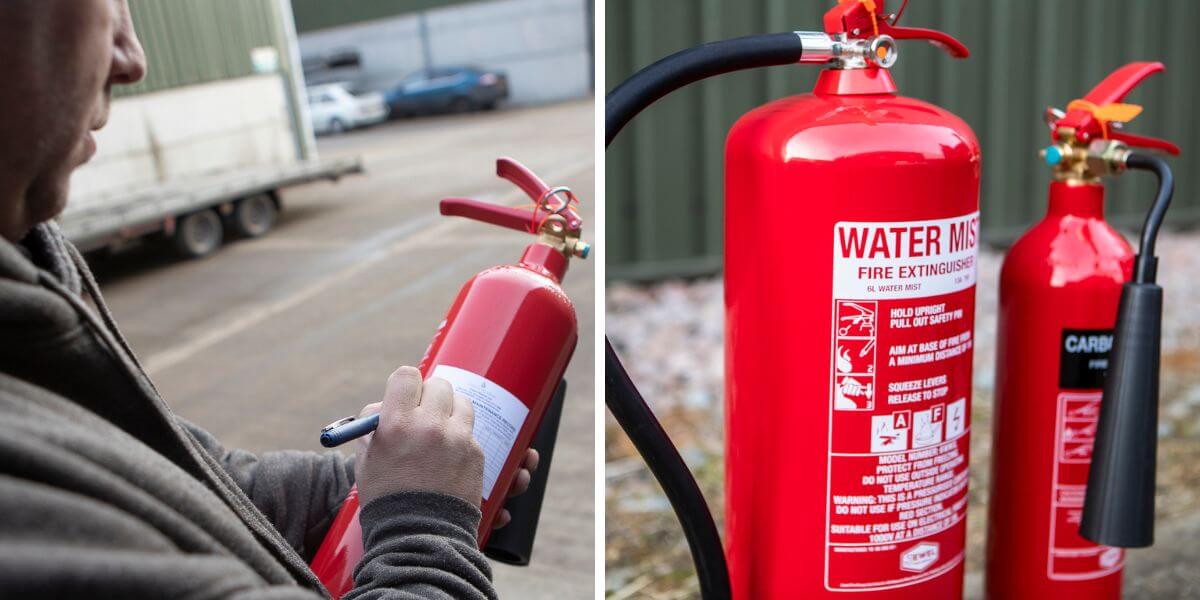
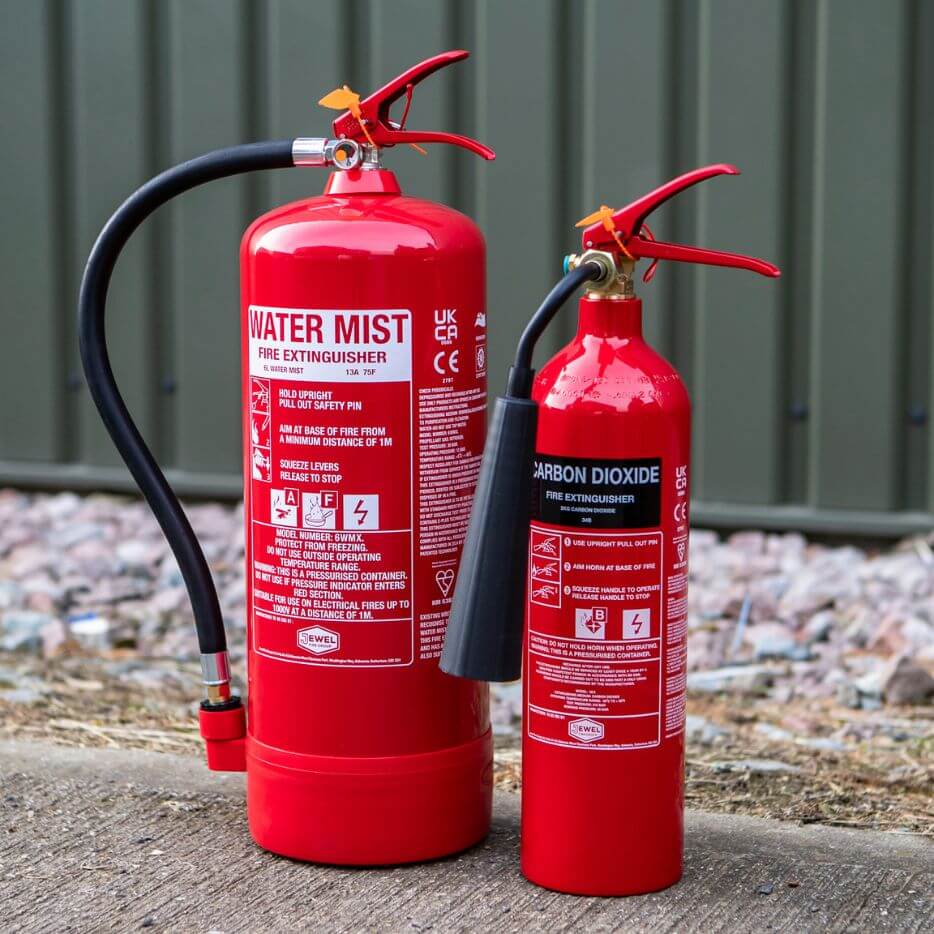
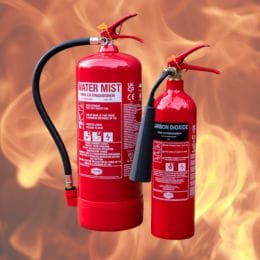
Additionally, it’s crucial to consider specific fire risks associated with different areas of your premises. For instance, if you have electrical equipment, you will need CO2 extinguishers, while kitchen areas may require wet chemical extinguishers.
Ultimately, the precise number and types of fire extinguishers needed should be determined through a professional fire risk assessment. This assessment will evaluate the unique hazards and layout of your premises, ensuring that you are adequately prepared for any fire emergency.
At Syndicate Fire Protection Services, we can help you get a thorough risk assessment and identify the right number and type of extinguishers necessary to keep your premises safe and compliant.
Fire extinguishers are designed for use on small, contained fires in their early stages. They should only be used when:
- The fire is small and not spreading rapidly
- You have a clear escape route
- You're confident in your ability to use the extinguisher safely
Remember only trained staff should use Fire Extinguishers. If there is a fire, untrained staff should evacuate. If you're trained and decide it's safe to use a fire extinguisher, remember the PASS technique:
- P - Pull the pin at the top of the extinguisher
- A - Aim the nozzle at the base of the fire
- S - Squeeze the handle to release the extinguishing agent
- S - Sweep the nozzle from side to side until the fire appears to be out
While fire extinguishers can be effective for small fires, it's crucial to prioritize personal safety. If the fire doesn't go out quickly (within about 30 seconds of using the extinguisher) or if it becomes larger or unmanageable, stop trying to fight it immediately. Drop the extinguisher and evacuate at once.
Remember, your safety is paramount. Never let fighting a fire block your escape route, and always be prepared to evacuate if the situation worsens.
Important: your Responsible Person should always organise staff training in the proper use of your Fire Extinguishers. This is not an option, it's an obligation (
Regulatory Reform (Fire Safety) Order 2005)!
At Syndicate Fire Protection Services, we not only provide and maintain Fire Extinguishers but also offer training on their proper use and evacuation procedures to ensure your safety in emergency situations.
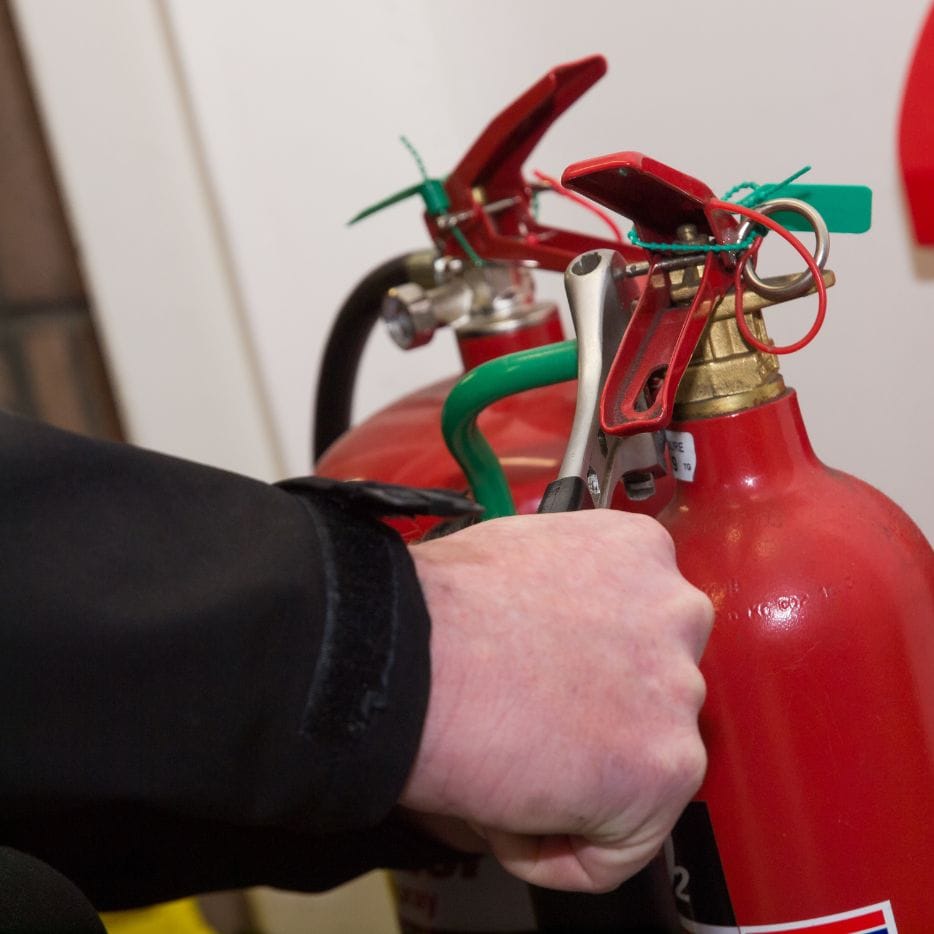
If you suspect one of your fire extinguishers has been tampered with or accidentally discharged or if you spot rust,
contact Syndicate Fire Protection immediately.
We provide professional inspection and maintenance services to ensure your fire safety equipment remains in proper working condition. Our technicians can assess your extinguisher, recharge it if necessary, or replace it if required. It's crucial to address this promptly to maintain your fire safety compliance.
And if you don't replace a rusty Fire Extinguisher, the integrity of the bottle could fail and the extinguisher may explode! Especially pertinent for CO2 extinguishers. These are more pressurized and can be very dangerous.