
Syndicate Fire Protection Engineers Excel in EAL Level 3 Course
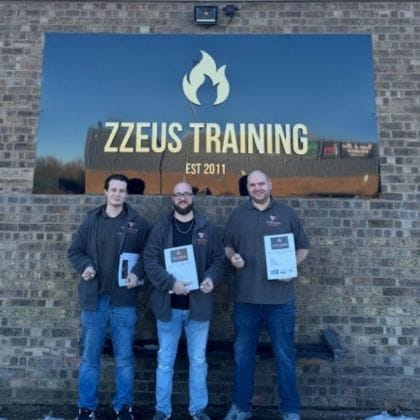
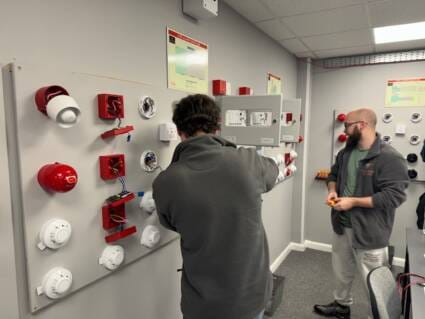
Syndicate Fire Protection recently completed an intensive 5-day EAL Level 3 course at the ZZeus Centre of Excellence in Lincoln, focusing on fire systems design, maintenance, installation and commissioning. This training is crucial for ensuring that our engineers are equipped with ever-improving knowledge and skills necessary to meet industry standards. And our clients’ needs.
Overview of the Fire Systems EAL Level 3 Course
The EAL Level 3 course is designed to provide a comprehensive understanding of Fire Detection and alarm systems as per BS 5839-1. Key components of the training include:
- Design Principles: Understanding the requirements for designing effective Fire Detection systems.
- Installation Techniques: Learning how to properly install these systems in various building types.
- Commissioning Processes: Gaining skills in commissioning Fire Alarm Systems to ensure they function correctly.
- Maintenance Protocols: Developing the ability to effectively maintain and inspect Fire Alarm Systems.
We also undertook safe isolation training, which is essential for safely managing electrical systems during maintenance or installation. This training covers critical topics such as safe working practices, legislation, and practical isolation techniques, ensuring that engineers can operate safely in potentially hazardous environments.
Why this is important for our clients
This training provides significant advantages for our clients at Syndicate Fire Protection:
- Enhanced Safety Standards: By ensuring that our engineers are well-trained in the latest Fire Safety protocols, clients can trust that their properties are equipped with effective Fire Protection measures.
- Regulatory Compliance: Knowledge of the code of practice BS 5839-1 and the legal framework set out in the Regulatory Reform (Fire Safety) Order 2005 ensures our installations are designed and maintained to the recognised benchmark for compliance.
- Improved Service Quality: Engineers with rigorous training can offer a higher quality service, from installation to ongoing maintenance. Ultimately leading to better Fire Protection for our clients.
- Proactive CPD: Continuous professional development (CPD) helps Syndicate Fire Protection stay ahead of industry changes, ensuring that clients benefit from the latest advancements in Fire safety Technology and practices.
The Culture of CPD at Syndicate Fire Protection
At Syndicate Fire Protection, CPD is ingrained in our company culture. The belief is that without CPD, stagnation sets in. And that can lead to lower quality service for our clients. And that’s the last thing we want!
By prioritising our ongoing education and training, we enhance our operational capabilities while reinforcing our commitment to client satisfaction. And compliance, of course.
This is particularly vital in the Fire Protection industry, where advancements in technology and regulatory requirements are constant. As industry experts say, "CPD training demonstrates a commitment to Fire Safety," showing our clients that their safety, compliance AND satisfaction is our priority.
Rounding up our ZZeus training
The recent training at ZZeus not only highlights our culture and Syndicate Fire Protection's dedication to excellence… but ensures our engineers are among the best trained in the industry. With all our guys achieving over 90% on their assessments, this reflects a high level of competence. Which, in turn, directly benefits our clients.
Frequently Asked Questions
What is BS 5839-1, and what does it cover?
BS 5839-1 is the British Standard for fire detection and fire alarm systems in non-domestic premises, such as commercial, industrial and multi-occupancy buildings. It sets out recommendations across the full life of a system: its design, installation, commissioning and ongoing maintenance. (Commissioning is the formal testing and sign-off that confirms a newly fitted system works as intended before it is handed over.) Fire risk assessors, insurers and enforcing authorities typically treat BS 5839-1 as the benchmark for a properly specified and maintained system. The five-day EAL Level 3 course recently completed by Syndicate Fire Protection Service engineers was built around this standard.
What do the design, installation, commissioning and maintenance stages of a fire alarm system involve?
These are the four stages that BS 5839-1 addresses. Design means specifying the right system category and detector coverage for the particular building and its fire risk. Installation is the physical fitting of detectors, sounders, call points and control equipment. Commissioning is the structured testing that verifies the completed system operates correctly before handover. Maintenance is the periodic inspection and servicing that keeps it working over its life. BS 5839-1 recommends that each stage is carried out by suitably competent people, which is why engineers train across all four rather than one part in isolation.
What is safe isolation, and why does it matter when working on fire alarm systems?
Safe isolation is the process of switching off, locking off and proving dead the electrical supply to equipment before work starts, so the circuit cannot be re-energised while an engineer is working on it. It matters because fire detection and alarm systems are connected to the mains, and working on live circuits carries a risk of electric shock and arc burns. The Electricity at Work Regulations 1989 require that people are protected from electrical danger, and safe isolation is a core control for meeting that duty. Following recognised isolation procedures significantly reduces the risk to both the engineer and the building's systems.
What is CPD, and why does it matter for fire alarm engineers?
CPD (Continuing Professional Development) is the structured, ongoing training an engineer undertakes after their initial qualification to keep their knowledge and skills current. It matters in fire protection because standards such as BS 5839-1 are periodically revised and detection technology continues to change. Competence is also a recurring theme in fire safety law: the Regulatory Reform (Fire Safety) Order 2005 expects fire safety work to be carried out by competent people. Regular CPD is one of the main ways engineers demonstrate that their competence stays up to date, rather than fixed at the point of their original training.
Does completing an EAL Level 3 course make an engineer competent to work on fire alarm systems?
An EAL Level 3 qualification is a recognised vocational award that builds the underpinning knowledge for fire detection and alarm work to BS 5839-1, spanning design, installation, commissioning and maintenance. On its own, though, a single qualification is only part of competence: in most cases competence is judged as a combination of relevant training, hands-on experience and ongoing CPD, rather than one certificate. At the recent course, engineers from Syndicate Fire Protection achieved over 90% in their assessments, which reflects the standard reached at that specific training event.
This article is provided for general information and educational purposes only. It is not legal advice, a fire risk assessment, a compliance audit, a technical specification, or a substitute for advice based on inspection of your premises. You should not rely on it as the basis for taking action, delaying action, or deciding not to act. Your legal duties, fire safety arrangements and system requirements depend on your specific premises, use, occupancy, risk profile and the findings of a suitable and sufficient fire risk assessment.
Fire safety and security legislation, standards, guidance and enforcement practice can change. Syndicate Fire Protection Service makes no representations or guarantees, express or implied, that content on this site is accurate, complete or current. For practical advice about fire alarm systems, emergency lighting, security systems or system maintenance requirements for your premises, call Syndicate Fire Protection Service on 01843 265 389.
For legal advice, fire risk assessment advice or confirmation of your statutory duties, speak to an appropriately qualified legal adviser, competent fire risk assessor or competent fire safety professional.